
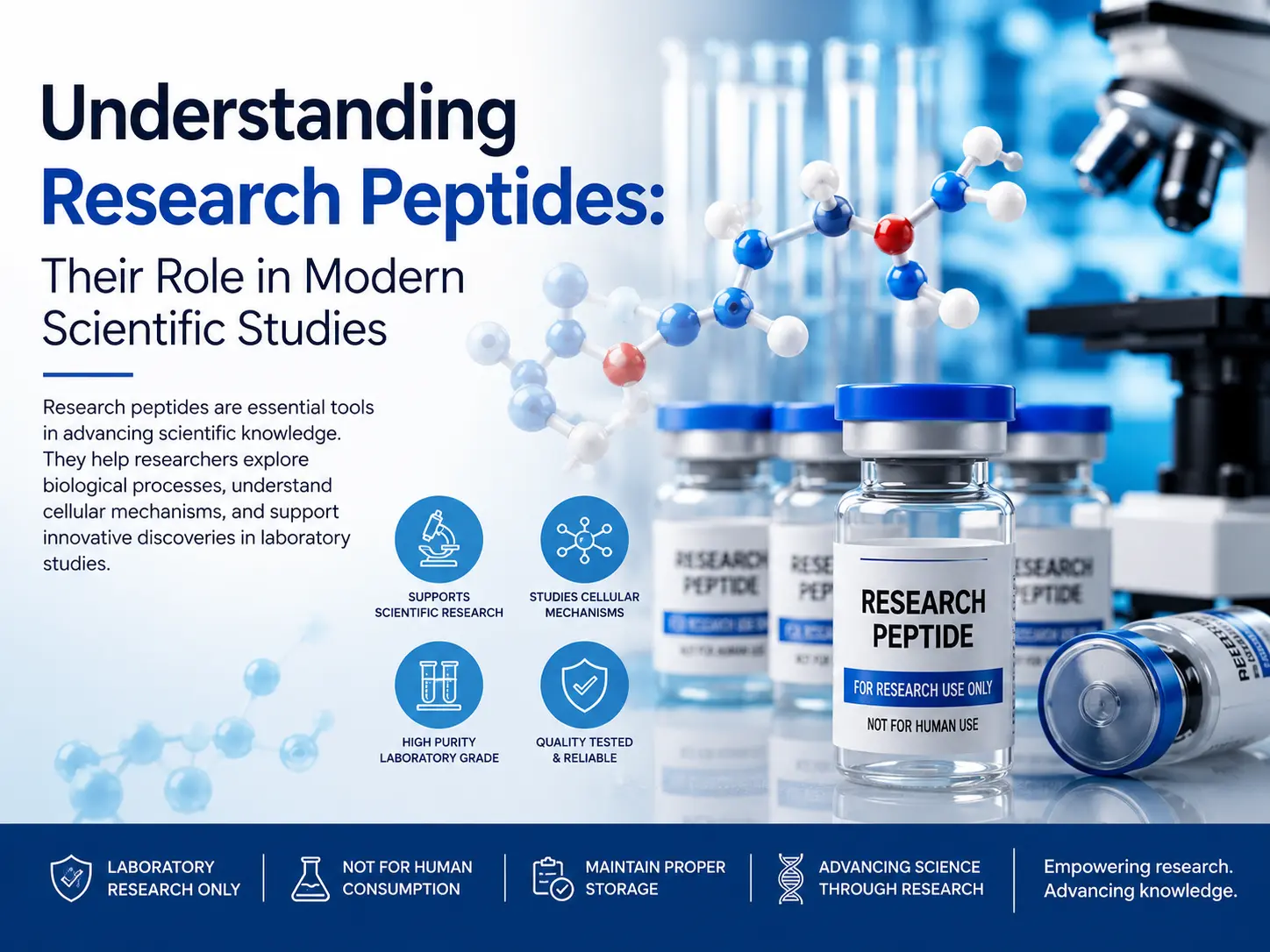
Understanding Research Peptides: Their Role in Modern Scientific Studies
Understanding Research Peptides: Their Role in Modern Scientific Studies
Scientific research continues to evolve as researchers seek better ways to understand biological processes and develop innovative solutions for future medical advancements. Among the many compounds used in laboratory studies, research peptides have gained significant attention for their versatility and importance in scientific investigations.
It is important to understand that research peptides are intended for laboratory and research purposes only and are not intended for human or veterinary use. Their primary role is to support scientific studies conducted by qualified researchers in controlled laboratory environments.
What Are Research Peptides?
Peptides are short chains of amino acids connected by peptide bonds. These amino acids serve as the building blocks of proteins, making peptides an essential part of many biological functions.
Research peptides are synthesized specifically for scientific investigations. Scientists use them to study cellular signaling, protein interactions, receptor activity, metabolic pathways, and numerous other biological processes.
Because of their relatively small molecular size, peptides can be valuable tools for understanding how different biological systems function.
Why Are Research Peptides Important?
Research peptides help scientists:
- Study cellular communication
- Investigate receptor interactions
- Explore protein synthesis
- Understand metabolic pathways
- Support pharmaceutical discovery
- Conduct laboratory validation studies
Their versatility allows researchers to gain valuable insights that may contribute to future scientific knowledge.
Laboratory Quality Standards
High-quality research begins with high-quality materials.
Reliable research suppliers prioritize:
- High purity levels
- Laboratory testing
- Batch consistency
- Secure packaging
- Proper storage conditions
- Quality documentation
These standards help researchers maintain reproducibility across experiments.
Storage and Handling
Proper handling plays an important role in maintaining sample integrity.
General laboratory recommendations include:
- Store according to manufacturer guidelines.
- Minimize repeated freeze-thaw cycles where applicable.
- Use sterile laboratory equipment.
- Avoid contamination during handling.
- Label samples clearly for traceability.
Always follow your laboratory's internal procedures and safety protocols.
Choosing a Reliable Research Supplier
Selecting the right supplier is an important part of any research project.
Consider the following factors:
Product Quality
Look for suppliers that emphasize quality assurance and laboratory-grade manufacturing practices.
Transparency
Professional suppliers provide clear product descriptions, handling recommendations, and research-use disclaimers.
Customer Support
Responsive customer service can assist with ordering, documentation, and general inquiries.
Secure Packaging
Proper packaging helps protect product integrity during transportation.
Reliable Shipping
Timely delivery helps laboratories maintain project schedules.
The Importance of Documentation
Scientific research depends heavily on accurate record keeping.
Researchers should document:
- Batch numbers
- Storage conditions
- Experimental procedures
- Laboratory observations
- Environmental conditions
Detailed documentation improves reproducibility and supports scientific integrity.
Supporting Responsible Research
Research peptides should always be handled responsibly within qualified laboratory settings.
Professional laboratories follow established protocols for:
- Laboratory safety
- Sample storage
- Waste disposal
- Equipment calibration
- Quality assurance
Responsible practices contribute to reliable and reproducible scientific outcomes.
Looking Ahead
As scientific research continues to expand, research peptides remain valuable tools for exploring biological mechanisms and advancing laboratory knowledge.
Whether supporting molecular biology, biochemistry, or pharmaceutical research, high-quality research materials and responsible laboratory practices remain essential for meaningful scientific progress.